
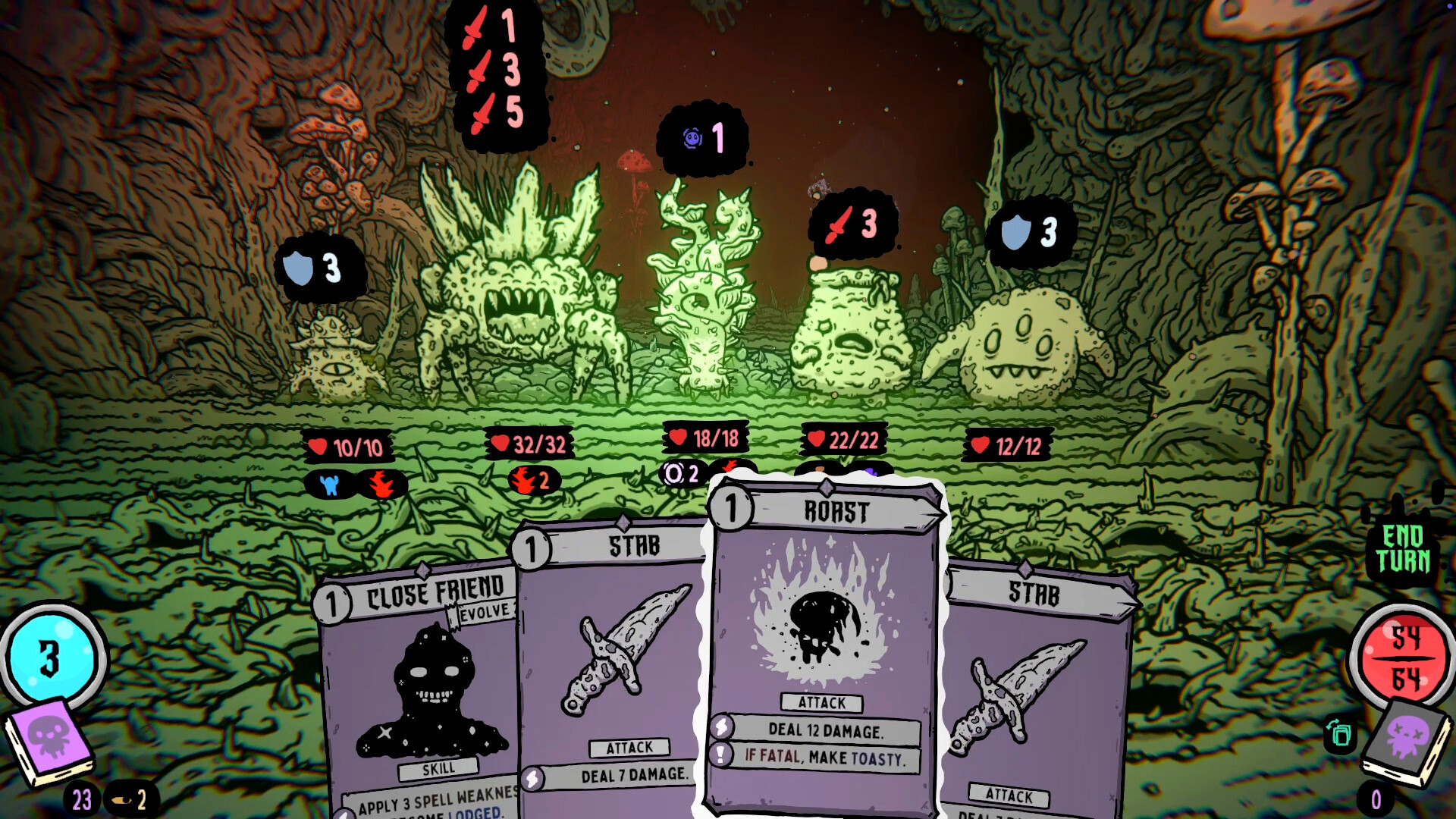
Combat deck basics
- 01
Start with a defense floor: at least one line that keeps a bad hand from ending the run immediately.
- 02
Add reliable damage before narrow payoff cards, so ordinary fights end before food and Gloom pressure pile up.
- 03
Watch draw quality. Every weak extra card makes the cards that actually save the fight harder to find.
- 04
Keep a boss-ready finish in mind: sustained damage, fast pressure, or a setup turn that pays off quickly.
This guide explains combat roles and deck pressure. It does not name a best card list until individual card text, deck ownership, and build version can be verified together.
Survive the bad hand
| If the hand shows… | Your Combat deck needs… | Why it matters |
|---|---|---|
| No clear attack | A defensive or recovery line | You can spend a turn without losing the run |
| Only setup cards | A smaller number of cards that work alone | Setup without survival turns into dead draws |
| Damage but no defense | A way to reduce, block, or recover pressure | Boss-ready decks need to live through awkward timing |
| Too many situational cards | Trimming or skipping narrow picks | Consistency is often stronger than a higher ceiling |
Before a boss
- 01
Count what the deck can do now, not what the planned build would do with perfect draws.
- 02
Keep one defensive answer for poor opening hands.
- 03
Protect the cards that close the fight instead of adding more low-impact options.
- 04
Connect the Combat deck to your route: food, camp choices, and Rest decisions decide how much pressure reaches the fight.
Primary sources
Release and platform facts are checked against the official Steam listings. Mechanical guidance is bounded to official or timestamped current-Demo footage inspected on September 8, 2026.